Historic Chadlington house reveals its story
A thoughtful retrofit of a Grade II listed home, improving comfort and energy efficiency.
This historic house in Chadlington is full of character, charm, and the signs of a long life as a much-loved village inn. When Jane set out to make the eighteenth-century building warmer, healthier, and ready for the future, she discovered just how much care and determination it takes to update a listed home.
What followed was a thoughtful retrofit that respected the house’s heritage while giving it the comfort and resilience it needed for the years ahead.
A labour of love
When you step inside the house, it immediately feels warm and welcoming. Its character still reflects its long past as the village inn.

The property served as the village pub for more than a century before becoming a private house in 1982. Now Grade II listed, it reflects many changes in use and style over time.
Jane and her husband fell in love with it in 1990. They were drawn to the challenge of caring for an eighteenth-century building that had grown and adapted many times. They wanted to uncover its evolution and secure its future so it would remain a comfortable and resilient home.
Updating a listed home takes time, patience, and determination. For Jane and her family, it became a true labour of love. As she says: “We’re all just passing through these buildings and hopefully we can help it keep going for another few hundred years.”
Why Jane considered retrofit
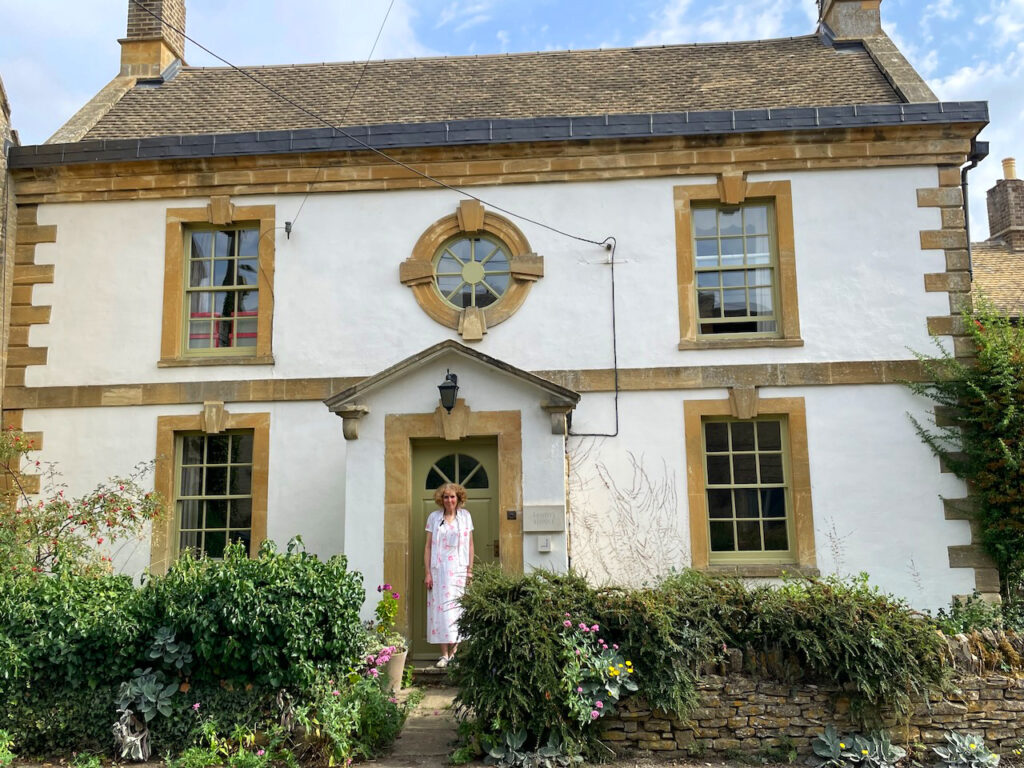
The house was built from limestone in the early to mid-eighteenth century. A brick façade followed in the nineteenth century, and a later, unexpected layer of cement render was added at an unknown date. The building began as two cottages and still has a complex layout. Jane describes it with affection:
“An adorable mongrel of a building with a motley collection of single glazed and metal windows.”
When Jane and her husband moved in, they connected the house to mains gas and upgraded the boiler. Even then, the system struggled to heat the building and proved expensive to run. Daily life was difficult: “We had huge energy bills and were never warm unless we stood next to the wood burner.”
The ground floor, redesigned in the 1980s, had an open-plan layout that lost heat through the walls and roof. Several poorly insulated extensions from its time as a pub also created cold, damp areas.
“It was so cold downstairs we had to wear our skiing suits indoors!”
Jane, Oxfordshire
Jane was originally motivated by the urgent need for remedial work on the house. As the project progressed, she became steadily aware that improving the energy efficiency of her home not only benefited the environment, but also made it a warmer, more comfortable place to live. Her view shifted as the work unfolded: “We need to emphasise the positive message that energy efficiency makes peoples’ lives more comfortable”
Why Jane turned to Cosy Homes Oxfordshire
Jane felt strongly that the house needed a bespoke overview and a tailored solution. She heard about Cosy Homes Oxfordshire from a neighbour and was inspired by the case study of another older house on the website. She was pleased to discover that Cosy Homes Oxfordshire uses a holistic, fabric-first approach and prioritises sustainable, natural materials.
She also worried about finding a suitable contractor and a reliable technical person who could oversee the project. It reassured her to learn that Cosy Homes Oxfordshire would connect her with a network of trusted contractors, and that she would have a Retrofit Coordinator to guide the key stages.
Like most people new to retrofit, Jane didn’t know what to expect and didn’t have a clear sense of which measures were possible. She signed up for an assessment and Whole House Plan and was delighted to hear about the options for internal wall insulation and lime plaster.
The measures recommended in the Whole House Plan included:
- Internal wall insulation in the attic rooms
- New windows and doors in non-historic parts of the house
- Secondary glazing to front historic sash windows
- Solar PV array
- Battery storage
- Decentralised Mechanical Extractor Ventilation system
- Air Source Heat pump
The Cosy Homes Oxfordshire team recognised Jane’s emotional attachment to the house and the sensitive conditions of working on a listed building. They brought in an expert consultant on historic houses to support the planning application. The consultant worked with the team to prepare a pre-planning application to improve the home’s thermal efficiency, based on the measures recommended in the Whole House Plan.
West Oxfordshire District Council eventually approved the planning application, although the decision added extra time to the process.
The consultant prioritised the windows, most of which were single glazed and letting in torrents of cold air. The front sash windows were historically important, so Jane was advised to add slim secondary-glazing panels with mouldings appropriate to the age of the building.
Surprises in the roof
The pre-application sought permission for the contractor to make a series of small openings in the plaster of the roof rooms to investigate the condition of the structure.
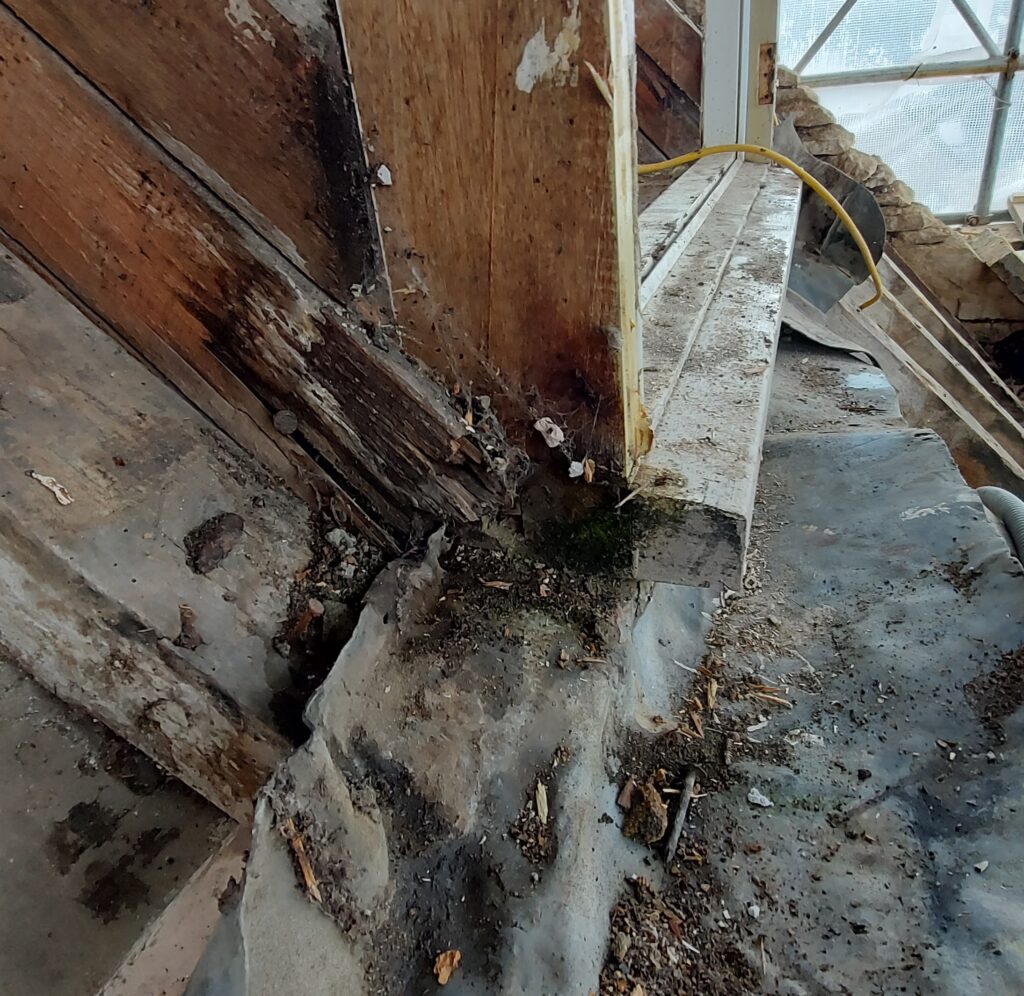
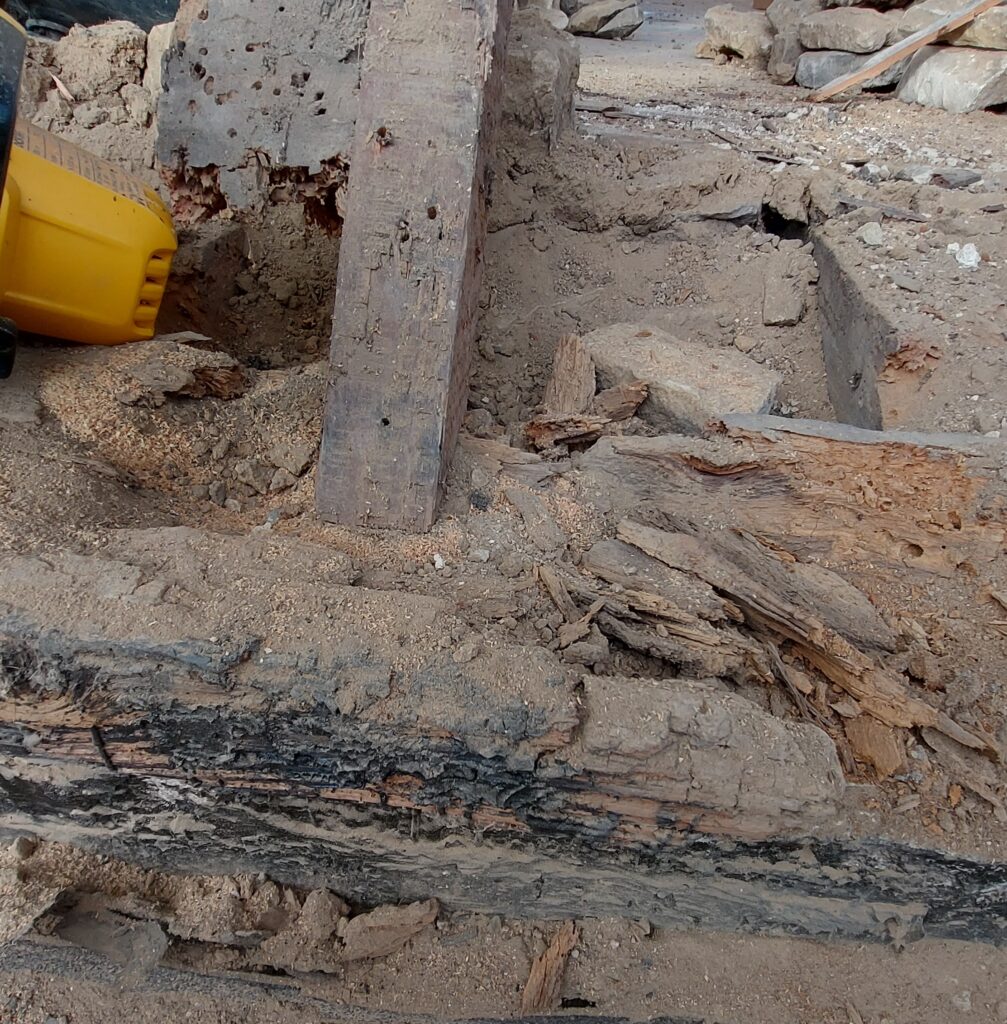
Once this work began and Lamberts Home Build, Cosy Homes’ appointed contractors, started to remove the old plaster from the walls and ceiling, the extent of the problem quickly became clear. Severe damp and rot had weakened the old rafters and trusses.
The situation was so serious that Jane’s Retrofit Coordinator and the Lamberts team sat her down to explain what they had found. They had to remove the entire roof, which exposed unstable wall ties and an infestation of Deathwatch Beetle thriving in the damp beams. The beetles can sit in timber for up to ten years, slowly eating through the wood. Jane admitted she had been hearing a constant tapping from the walls, which turned out to be the beetles attracting a mate.
Below images show some of the rotten timber, and timber that was not damaged being retained, and supported with new wall ties.

Everything multiplied and snowballed
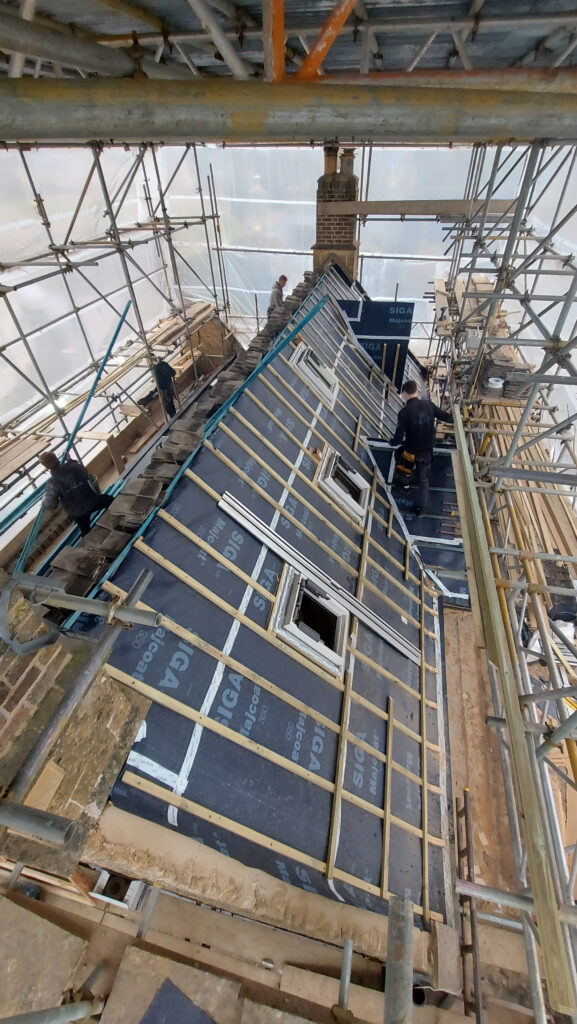
Although the house is not in a conservation area, Chadlington is a Bat Conservation area, and all bats and their roosts are protected by law. A bat specialist advised that roof works should take place in winter, when bats were least likely to be present.
This meant erecting an extensive tin roof above the existing one, supported by scaffolding, so the work could continue in bad weather. No bats were found in the end, but the conservation process added significantly to the costs.



Jane’s neighbours were supportive of the disruption and had been engaged early in the process. She wanted to acknowledge the building’s long history as a public house, so she held a ‘Pub for a day’ event and opened the house to local people who came to share stories and memories from when it was a popular village pub.
Remedies
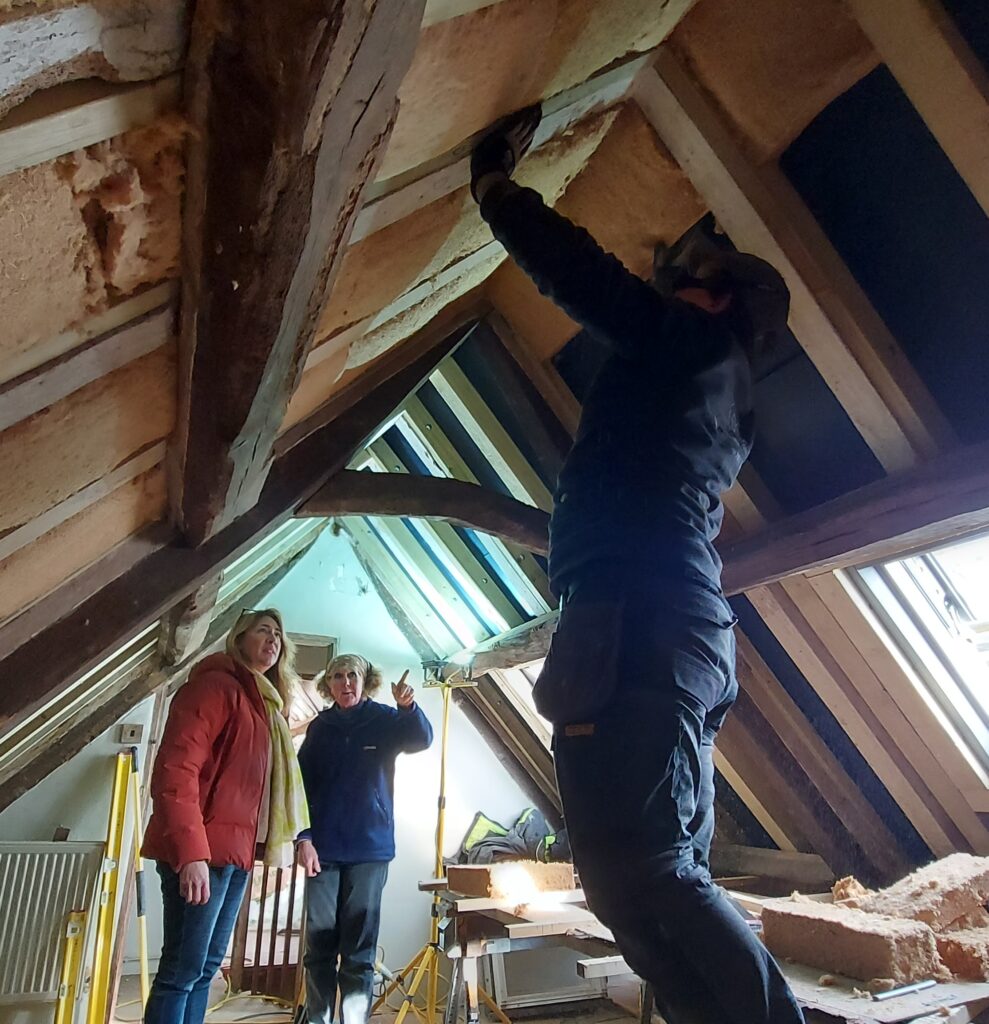
The planners wanted the old beams strengthened rather than replaced, so a structural engineer designed a set of bespoke iron supports. Lamberts then crafted individual sleeve joints to help the trusses meet the new wall plates. Their workmanship was so precise that Jane decided to keep the joints exposed as an architectural feature.
Some structural timbers did need to be removed. Under the direction of the structural engineer, the team tied the new timbers into the old with careful jointing that replicated the original carpentry.
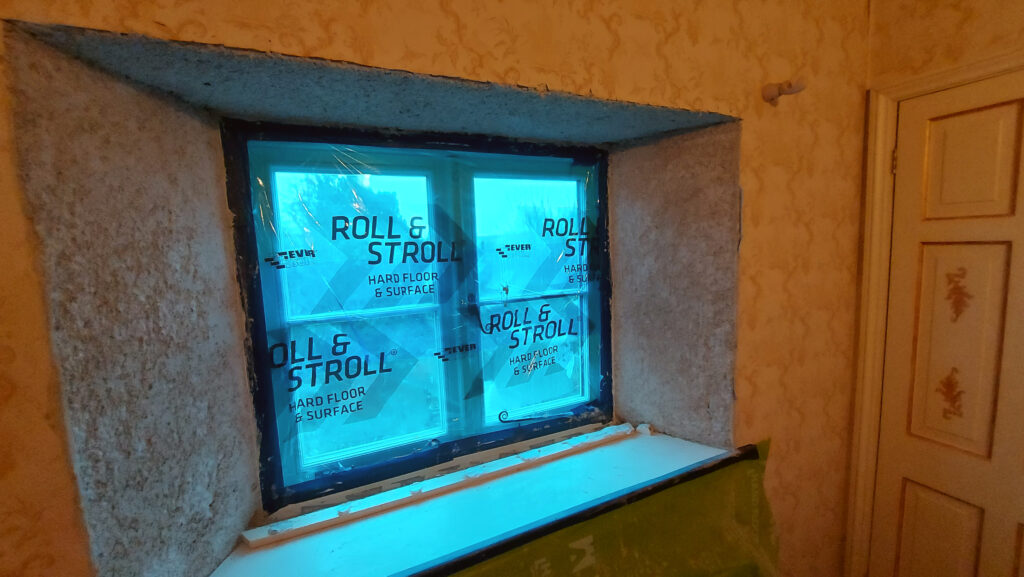
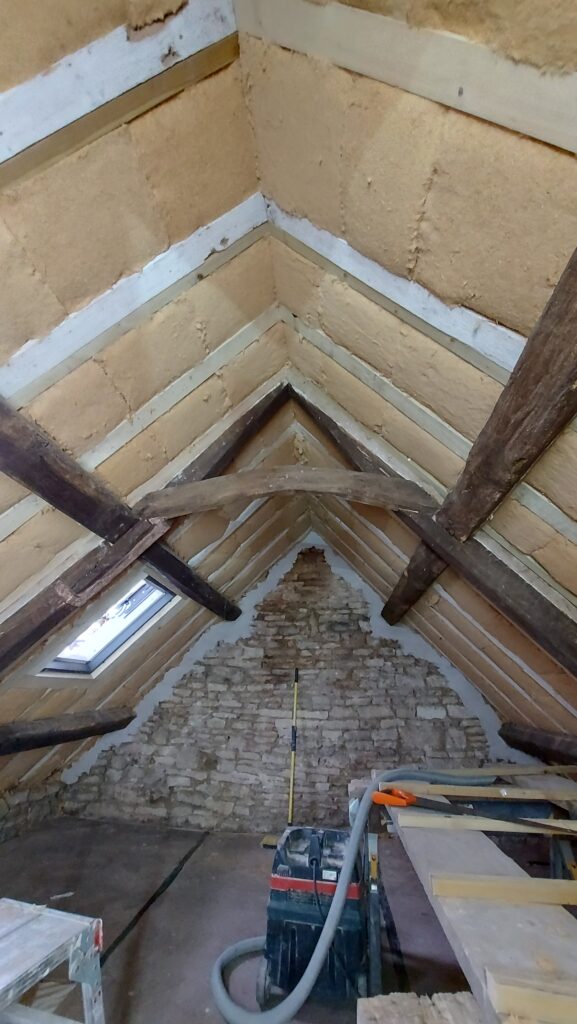
The contractors applied wood fibre internal wall insulation to the loft ceilings and walls so the timbers could breathe and to help reduce overheating. They finished the gable walls with Diathonite, a breathable insulated lime plaster that adds thermal protection and prevents moisture from being trapped within the walls. The final layer of lime plaster has a warmth and beauty that suits the building’s historic character.
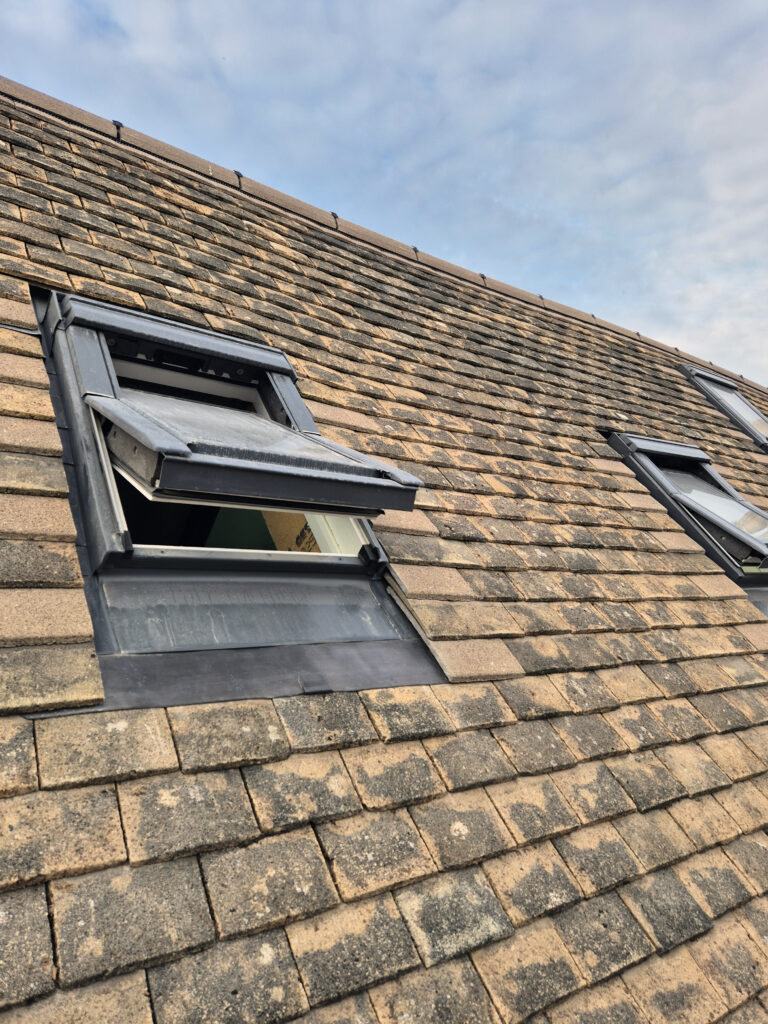
The planning consultant confirmed that the 1980s dormer windows were not historically significant, so the team fitted new thermally tight double-glazed windows and new Velux rooflights.
The wooden floors were sanded and varnished. With great attention to detail, new skirting boards were individually shaped to fit the uneven floor. As a result, two previously cold and unwelcoming spaces became warm, usable rooms.
Jane really valued the expertise of her Retrofit Coordinator and the experience of her contractors. The project created an opportunity to trial infra-red heating, which can work well in rooms that are not used every day. Jane visited one of their other clients to see the panels in action and decided to go ahead. She is delighted with the system, which provides targeted heat without needing to run the whole central heating system.
Infra-red heating surprised her in the best way: “It provides a lovely quality of heat and I’m now a big enthusiast! The technical service was fantastic, and the continuity of the Retrofit Coordinator was incredibly helpful.”
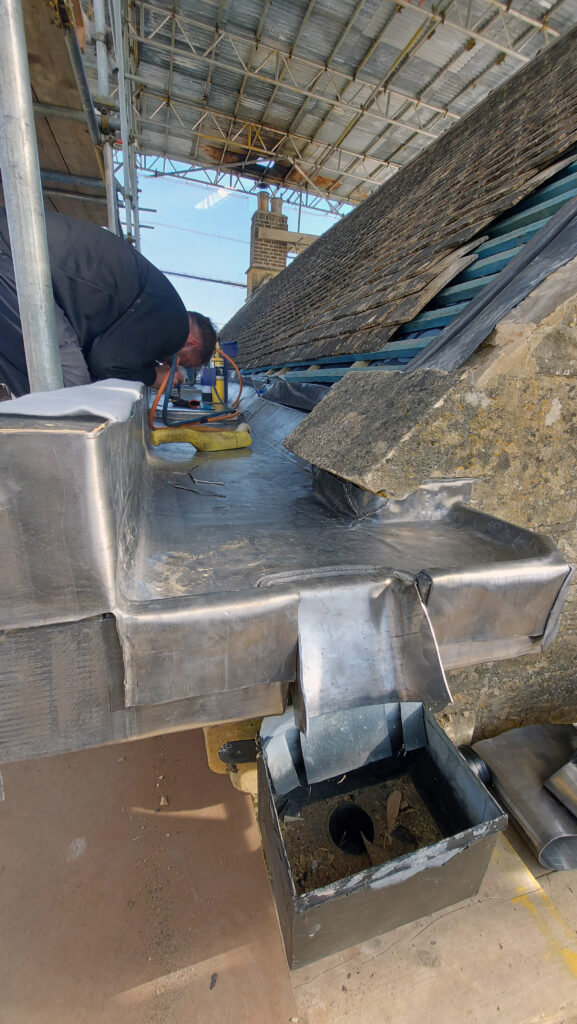
The team discovered that the lead guttering at the front of the house was completely rotten, so they removed it and replaced it with a specially crafted stepped detail and a gentler slope to the downpipe to improve flow and drainage.
Jane’s office was also transformed. The walls were insulated with wood fibre, lime plaster, and Diathonite, creating a warm and breathable working space. When the wooden floor was lifted, the contractors found an unexpected layer of sand beneath the joists, probably added long ago for soundproofing. They supported the ceiling with scaffolding, removed the sand carefully, and then added hemp under the boards to improve airtightness and acoustic insulation.

As insulation improved throughout the house, good ventilation became essential. The team installed a decentralised mechanical extractor system with low-energy, continuously running fans to reduce moisture build-up. They filled the unsightly holes left by the old units with recycled stonework, blending the repairs seamlessly into the rest of the house.
“I’m really noticing the difference in comfort and warmth as winter draws on. It’s a completely different house.”
Jane, Oxfordshire
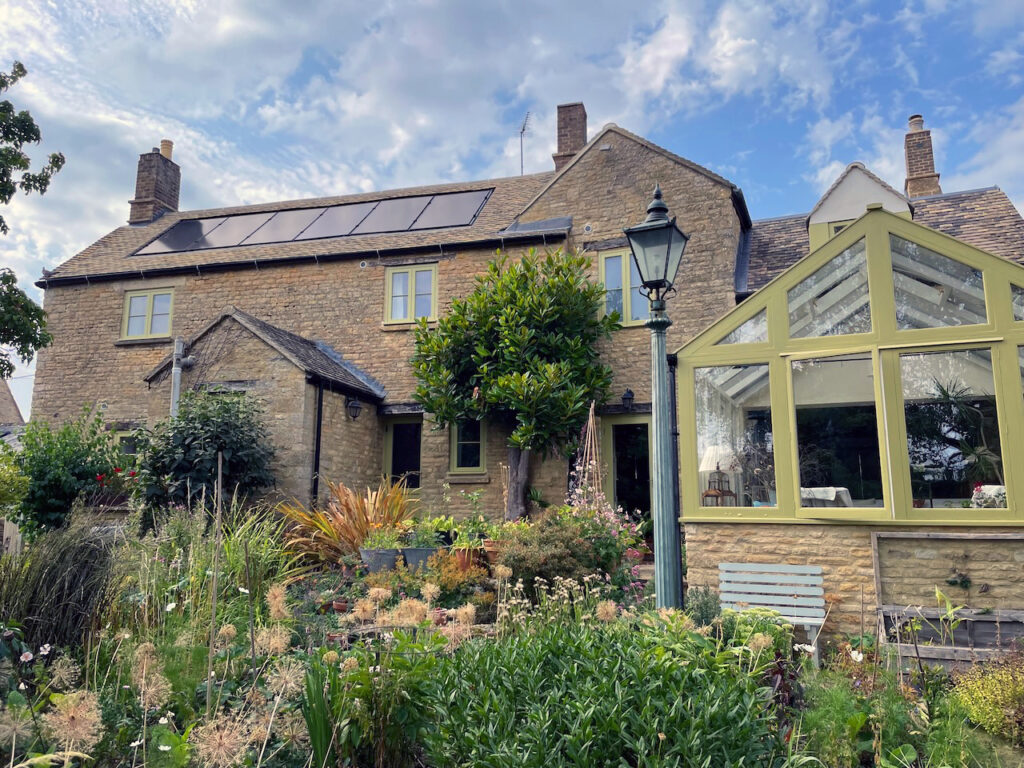
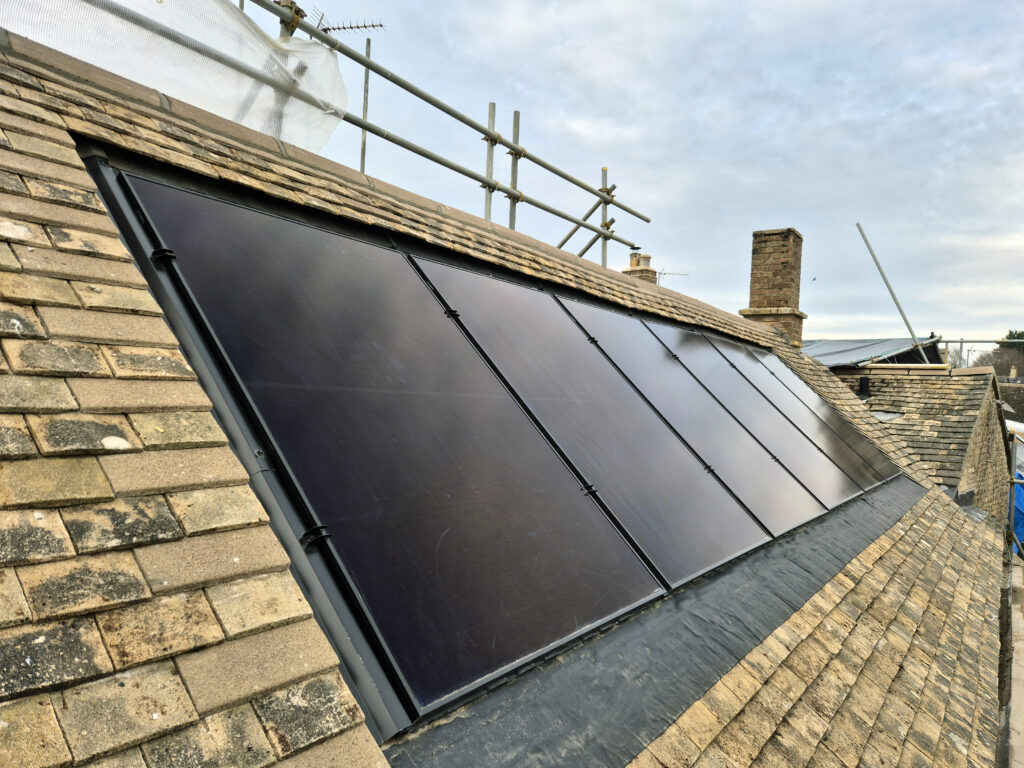
As Jane became more interested in reducing her environmental impact, she wanted to generate her own renewable energy. The team installed an in-roof solar PV array on the back of the house, in line with planning consent, and fitted a battery with a storage capacity of 11.5 kWh.
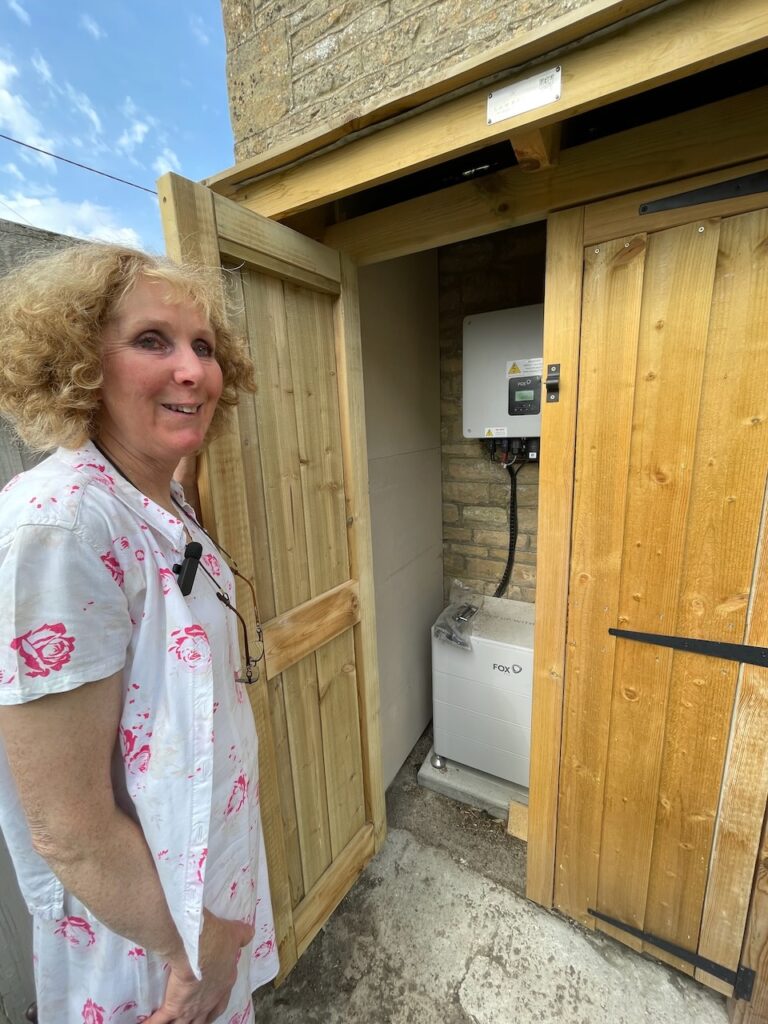
They also built a bespoke outdoor ‘sentry box’ to protect the battery and inverter from the weather. Jane later added two more battery units, bringing the total storage to 28.82 kWh. Because the batteries could charge fully within a six-hour window, she was able to make use of lower overnight tariffs.
It was worth it!
Jane felt the benefits straight away: “I’m really noticing the difference in terms of comfort and warmth in the house as winter draws on. I’m very conscious there is more I could do in terms of internal wall insulation, and I hope I’ll be able to build on the very valuable work we’ve already done.”
Renovating a listed property can be challenging and disruptive, but Jane’s courage and love for the house helped her through it. She lived in two rooms on the ground floor with her 16-year-old cat Daisy throughout the project. With only a wood burner and two electric radiators – and the support of the Cosy Homes team – she managed the upheaval of a winter retrofit taking place around her.
She also valued the people who supported her: “Everyone at Cosy Homes Oxfordshire and Lamberts Home Build were very responsive and very nice people to work with.”
Jane found the experience challenging, exciting and educational. Far from being put off, she is now thinking about installing a heat pump, now that the house is well insulated.
The house is warm, efficient and ready for its next chapter. And although her energy bill in the month after completion came to just 23p, she insists:
“It’s not just about the money!”
Looking back, she feels proud of how far she has come: “I’ve learnt a huge amount as a result of this project, and it’s given me the confidence to go further in the future.”
“Making the house more energy efficient hasn’t just cut our bills – it’s made it a much more comfortable place to live.”
Jane, Oxfordshire